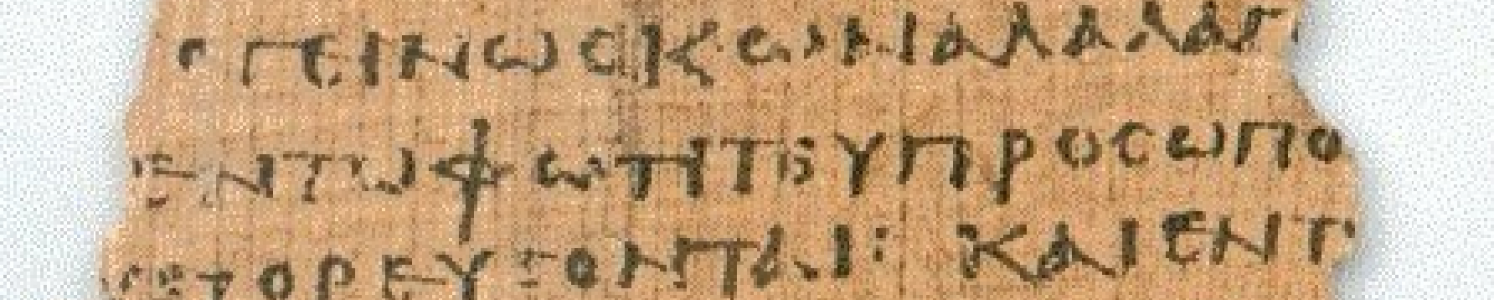
Romans 13:8 Owe no one anything, except to love each other, for the one who loves another has G4137fulfilled the law.
Romans 13:10 Love does no wrong to a neighbor; therefore love is the G4137fulfilling of the law.
The following are two ‘doctrines’ that I was taught by mainstream theology; see if either of them sound familiar:
- Jesus ‘fulfilled’ the Law of God given through Moses so now we don’t have to.
- The Law of God given through Moses, which Jesus ‘fulfilled’, has subsequently been abolished and is no longer valid post-Resurrection.
First ‘doctrine’: It is taught that “Jesus fulfilled the Law so now we don’t have to”.
So then, my question is: we don’t have to “what“?
I submit it is universally accepted and taught that, “we don’t have to ‘observe or keep the Law of God given through Moses’ because Jesus fulfilled it for us.”
The words that I have underlined directly above are not found anywhere in the entire Bible, yet this is a ‘doctrinal-truth(?)’ which has been taught throughout Christendom for centuries…
In the verses at the top of this page the apostle Paul claimed that “our love” fulfills the Law. So according to Paul, there is still more ‘Law-fulfilling’ to do by us mere mortals. Did Paul believe Jesus didn’t do a good enough job at Law-fulfilling and thinks we need to help Jesus out? Did Jesus not truly fulfill the Law for us ‘so that we don’t have to‘? Was the Law fulfilled by Jesus, or wasn’t it? We’ll address these questions shortly.
Second ‘doctrine’: According to mainstream teachings, “our love” fulfills all of the requirements, commands, statutes and decrees of the Law of Moses. Yet, at the same time they preach that the ‘Law of Moses’ is done away with, annulled and abolished. Does our ‘love’ fulfill an abolished Law? Really??? Which is it? Is it still in effect and needing to be fulfilled by our love, or is it abolished? It cannot be both effectively fulfilled by our love and abolished at the same time.
The following verse is where all the confusion stems from ~
Matthew 5:17 “Do not think that I have come to abolish the Law or the Prophets; I have not come to abolish them but to G4137fulfill them.
This verse is (mis)interpreted in two different ways:
- Fulfill means ‘put an end to‘, ‘abolish’, ‘annul’, or ‘rescind’.
- Fulfill means ‘all the Laws are concluded so no one else has to do them’.
If #1 is correct then Matthew 5:17 reads, “Do not think that I have come to abolish the Law or the Prophets. I have not come to abolish them but to ‘abolish’ them.”
Case closed on (mis)interpretation #1. Not only is it utterly illogical, but it is grammatically incorrect to think the word ‘fulfill’ means ‘abolish’, ‘annul’, ‘put an end to’ or ‘rescind’. We will explore the established Greek definition of the word “fulfill” in just a moment.
As far as #2 is concerned, once again, all I have to say is that there isn’t one manuscript, document or translation anywhere by the ‘Breath of God’ that have the words ‘so no one else has to do them’ . Those words do not exist except in the minds of wishful thinkers who don’t want to uphold the Law of God, or by those that don’t know what the Greek truly means.
What does the text say?
Matthew 5:17 “Do not think that I have come to abolish the Law or the Prophets; I have not come to abolish them but to G4137fulfill them.
First off, let’s take a look at what Jesus said he did not come to do to the Law. He said he did NOT come to abolish the Law, and the English word ‘abolish‘ in the Greek is G2647, καταλῦσαι/katalysai. Thayer’s Greek Lexicon states this to mean: to deprive of force, annul, abrogate, discard.
The Son of God states that He did NOT come to deprive of force, annul, abrogate or discard the Law of Moses.
So now we know it is a “fact”, the Law of Moses was NOT abolished! The Son of God just said so… shall we believe him or some denominational preacher from the Christian System?
So, what did He come to do with it?
Jesus said He came to fulfill the Law of Moses, and the word ‘fulfill’ is the Greek word πληρῶσαι/plērōsai, Strong’s G4137. Thayer’s Greek Lexicon states this to mean: to carry into effect, to perform, to accomplish; to fulfil, i.e. “to cause God’s will (as made known in the law) to be obeyed as it should be, and God’s promises (given through the prophets) to receive fulfilment“: Matthew 5:17.
That is the actual definition of ‘plērōsai/fulfill’ as it pertains ‘specifically’ to Matthew 5:17 according to ‘Thayer’s Greek Lexicon’, which everyone has access to online.
In that definition do you see the words ‘annulled’ or ‘abolished’ or ‘revoked’ or ‘rescinded’ or ‘repealed’ or ‘completed-so-you-don’t-have-to’?
All of the ‘other’ definitions of the word plērōsai in ‘Thayer’s Lexicon’ as it pertains to verses other than Matthew 5:17 are as follows:
- properly, to fill up to the top: so that nothing shall be lacking to full measure, fill to the brim.
- to perfect, consummate; to make complete in every particular; to render perfect; to carry through to the end, to accomplish, carry out.
- to carry into effect, bring to realization, realize; of matters of duty, to perform, to execute.
Again, no mention that even remotely comes close to the mainstream Christian interpretation of this word.
Let’s take a look at the use of this word, G4137/plērōsai, in other New Testament verses ~
Matthew 3:15 But Jesus answered him, “Let it be so now, for thus it is fitting for us to G4137fulfill all righteousness.”
- Did Jesus and John just ‘put an end‘ to “all righteousness”? Is righteousness now ‘finished for all time‘? Did “all righteousness” cease to exist after that event? Is that what the word ‘fulfill’ means???
Next, we have Paul himself using this same word in ‘Romans’ ~
Romans 15:19 by the power of signs and wonders, by the power of the Spirit of God—so that from Jerusalem and all the way around to Illyricum I have G4137fulfilled the ministry of the gospel of Christ;
- Did Paul ‘do away with‘ or ‘put an end to‘ the gospel of Christ? Did he fulfill the ministry of the gospel ‘so now we don’t have to‘? That is completely illogical and un-Scriptural.
Thayer’s Greek Lexicon specifically defines ‘fulfilled’ with regards to Romans 15:19 as: to cause to be everywhere known, acknowledged, embraced (I have fully preached), Romans 15:19.
Here are a few more verses that use the same Greek word G4137/plērōsai. Let’s see if the standard of today’s mainstream teaching of this word holds true ~
John 3:29 The one who has the bride is the bridegroom. The friend of the bridegroom, who stands and hears him, rejoices greatly at the bridegroom’s voice. Therefore this joy of mine is now G4137complete.
- Was the joy of Jesus ‘done away with’ or ‘abolished’? It’s the exact same word in the Greek as in Matthew 5:17!
John 15:11 These things I have spoken to you, that my joy may be in you, and that your joy G4137may-be-full.
- Did the disciples’ joy ‘stop’ or ‘become rescinded’ or ‘revoked’ after Jesus spoke these things?
Act 5:28 saying, “We strictly charged you not to teach in this name, yet here you have G4137filled Jerusalem with your teaching, and you intend to bring this man’s blood upon us.”
- Did Peter and the apostles ‘do away with’ Jerusalem?
Act 13:52 And the disciples were G4137filled with joy and with the Holy Spirit.
- Oh no, the disciples ‘abolished’ their joy AND the Holy Spirit!?! No more Holy Spirit for us I guess…
Romans 15:13 May the God of hope G4137fill you with all joy and peace in believing
- Did God ‘rescind’ all joy and peace?
2 Corinthians 10:6 being ready to punish every disobedience, when your obedience is G4137complete.
- Hooray! Our obedience is ‘done away with’…
Galatians 5:14 For the whole law is G4137fulfilled in one word: “You shall love your neighbor as yourself.”
- Just like in Matthew 5:17, the Law is ‘abolished’, ‘annulled’ and ‘revoked’; a second time???
Ephesians 1:23 which is his body, the G4137fullness of him who fills all in all.
- So, the body of Jesus is ‘done away with’???
Philippians 4:19 And my God G4137will-supply every need of yours according to his riches in glory in Christ Jesus.
- I can’t even think of how to describe this one sarcastically because it is so blatantly obvious that this word means to “fill up”, to “accomplish” and to “bring to realization”.
Colossians 1:25 of which I became a minister according to the stewardship from God that was given to me for you, to make the word of God G4137fully-known,
- Is Paul really saying that the Word of God is ‘rescinded’ and ‘no longer applicable’ to me because he had made it “fully-known” to the Colossians??? This is the same Greek word that’s interpreted as ‘fulfilled’ in Matthew 5:17!
As you can see, we have been, and still are being taught a wrong interpretation of Matthew 5:17 with regard to the word “fulfill”.
Think logically, not emotionally.
All you really have to do, is just keep reading in ‘Matthew’ to understand the context. In reality, Jesus is proclaiming the exact opposite of we’ve been taught by the mainstream Christian system ~
Matthew 5:18-19 18For truly, I say to you, until heaven and earth “pass away”, not an iota, not a dot, will “pass” from the Law until all is accomplished. 19Therefore whoever relaxes one of the least of these commandments and teaches others to do the same will be called least in the kingdom of heaven, but whoever does them and teaches them will be called great in the kingdom of heaven.
Jesus is explaining to everyone, everywhere, that he did NOT come to abolish or rescind or put an end to the Law of Moses. He is telling us that he came to fully preach and obey it the way it should be; He is the ‘Master-teacher’ and our ‘Example’.
Therefore, unless Jesus doesn’t know what he’s talking about, not one letter of the Law of God given through Moses will “pass” until heaven and earth “pass away”.
Take a look outside to verify…
By the way, guess what the Greek word for “pass away” and “pass” is? It’s G3928 παρέλθῃ/ parelthē both times in verse 18 with regards to ‘not one dot of the Law’ and to ‘heaven and earth’. This is the real word for “to render void”, “to pass away”, “to disregard”, “to perish” and “to neglect” according to Thayer’s Greek Lexicon.
‘Not one word of the Law will be disregarded, or neglected or perish or rendered void until heaven and earth are disregarded, neglected, perish, and rendered void.’
The parallel verse in Luke 16 echoes the same ~
Luke 16:17 But it is easier for heaven and earth to pass away than for one stroke of a letter of the Law to fail.
The Greek word for “fail” is G4098, πεσεῖν/ pesein. Thayer’s Greek Lexicon states this to mean: to lose authority, no longer have force, of sayings, precepts, etc., Luke 16:17.
According to the Word-of-God-in-the-flesh, the Law that was in effect when He spoke these words in ‘Matthew’ and ‘Luke’, will not be rendered void or lose authority until heaven and earth pass away. This heaven and earth, that Jesus is speaking about, the one that you see outside your window right now, do not pass away until Revelation chapter 21, and “all is accomplished” does not happen until after that.
As God, Jesus does know what he’s talking about. The fact that heaven and earth haven’t passed away yet means that the Law still stands; the Law of “His” day, the Law of God given through Moses, is still in force and in authority; at least according to the Son of God.
The apostle Paul, the bond-servant of Jesus, stated the exact same thing ~
Romans 3:31 Do we then overthrow the law by this faith? By no means! On the contrary, we uphold the law.
The Greek word for “uphold” is G2476 ἱστάνομεν/histanomen, which Strong’s Concordance states to mean: (a) I make to stand, place, set up, establish, appoint; I place myself, stand, (b) I set in balance, weigh; (c) I stand, stand by, stand still; met; I stand ready, stand firm, am steadfast. Please click this link and read “Paul Commands Us to Uphold the Law“.
Thayer’s Greek Lexicon states ‘histanomen’ as: shall be made to stand, i.e. shall be kept from falling, to establish a thing, cause it to stand, i.e. to uphold or sustain the authority or force of anything; precisely what Luke 16:17 above stated.
All of this is stated in the Present Tense in the Greek. Paul is telling us in ‘his’ Present Tense that “The Law” is to stand, it is to be established, it is to be kept from falling, and “its authority and force is sustained“. How many decades after the cross did Paul write this???
We are being taught erroneous doctrine regarding the Law of God given through Moses and the true interpretation of these verses! We are being lied to! Whether it is deliberate or in ignorance is irrelevant, it’s still deception.
The Law of God given through Moses still stands, at least according to the ‘Son of God’ and the ‘apostle Paul’… and I believe them, not some man-made denominational creed that states the opposite. The mainstream denominational dogma that “a new religion” has taken the place of the old system, or that “the Law has been completed and a new dispensation of grace is upon us to take its place” is pure blasphemy! ‘Nothing’ has been done away with and Jesus the Anointed did not come to start anything new, He came to defeat death so that what we do actually matters!! Without his conquering of death nothing anyone has done or will do matters; we all would be dead in our trespasses and sins. Now, with the deliverance from the bondage-of-sin made possible for all who believe that Jesus rose from the dead, we can walk according to the God-Ordained statutes and commands, without the condemnation of our past sins. We can now be worthy of the inheritance of eternal life that He promised. The only thing Jesus did away with is ‘death’ for those that have faith in His resurrection and keep the commandments of God!!!
Final Thought: “Fulfill” means to carry into effect, to perform, to accomplish; and in Matthew 5:17 it means “to cause God’s will (as made known in the law) to be obeyed as it should be, and God’s promises (given through the prophets) to receive fulfillment“. That is exactly what Jesus did; he obeyed the Law as it should be, and he carried into effect specific promises of God in order to accomplish his mission as Messiah, according to the Law and the Prophets.
Lastly, if we let ‘the Scriptures test the Scriptures’, all we need to do is read Luke 24 for Jesus to define Matthew 5:17 ~
Luke 24:44-47 44“Then he (Jesus) said to them, “These are my words that I spoke to you while I was still with you, that everything written about me in the Law of Moses and the Prophets and the Psalms must be G4137fulfilled (Matt. 5:17).” 45Then he opened their minds to understand the Scriptures, 46and said to them, “Thus it is written, that the Christ should suffer and on the third day rise from the dead, 47and that “repentance” for the remission of sins should be proclaimed in his name to all nations, beginning from Jerusalem.”
- For further study of Paul’s teachings, as well as the original Greek, see the ‘Links’ at the top of this page or blog posts at the bottom. Be like the Bereans, and test Paul’s doctrines to the “Scriptures”; look up for yourself more than 60 of the “forever verses” listed directly below. Please ‘share’ this study. Thank you for your time.


When we are told to uphold the Law, which ones? The 10 Commandments only? The Civil? Ceremonial? Only the ones we deem as part of the moral law? If Christ fulfills the law and we are told to obey it, then how are we free from it (Gal 5)? Are we only free from it’s condemnation? This article tries to dismantle two views, but neglects to articulate a view.
LikeLike
Thank you for taking the time to read the study. I completely empathize and understand all of your questions. I’ve been exactly where you are!
I am more than happy to discuss those questions with you, however, I would request that you first read ‘Galatians Part 1’, if you haven’t already. I go to great lengths in that study to prove “Scripturally”, that Paul did not tell us that we’re free from the Law; we have been deceived by mainstream theology/dogma.
‘Galatians’ is a letter, and there were no verses or chapter breaks when Paul wrote it. Any particular verse needs to be read in the “context” of the chapters before and after it, and verses 1-4 of chapter 5 has been taken out of context for a very long time. Plus, any “doctrine” that is gleaned from a verse of Paul must harmonize with his other letters/statements, as well as, ALL of the rest of Scripture.
Also, I did articulate my view in this study:
• The fact that heaven and earth passing away has not happened yet, means that the Law still stands; the Law of “His” day, the Law of God given through Moses, is still in force and in authority; [8th paragraph above the ‘Final Thought’]
• The Law of God given through Moses still stands, at least according to the ‘Son of God’ and the ‘Apostle Paul’… and I believe them; [last sentence of the study, right before the ‘Final Thought’]
Again, thanks for the comments/questions. When you’ve read ‘Galatians Part 1’ please get back to me. I look forward to hearing from you.
May GOD bless your time in His Word,
Rich
LikeLike
How come we don’t have to sacrifice animals anymore though?
LikeLike
Greetings,
Thanks for taking the time to read the studies, I hope and pray they are a blessing.
I recommend you would read the rest of my studies, as they will answer your questions more thoroughly than I can here in one response.
In short though, the only reasons there are no sacrifices at this time is because there’s no authoritative body of Priests that have been ritually cleaned by red heifer ashes and there is no Altar on the Temple mount.
When there was still a second Temple the disciples and apostles still went to the Temple and they still offered sacrifices and offerings.
Peter and John were at the Temple for the hour of prayer post-resurrection, Acts 3:1.
The apostle Paul, in Acts 21, went to the Temple to observe and keep the Nazarite vow laws with four other believers, post-resurrection of the Messiah; this included animal sacrifice. The English word ‘sacrifice’ is not accurate and I recommend not using it; the Hebrew word, Corban, means ‘to draw near’. The blood of the animals allowed for indexing on the altar which allowed the supplicant to draw near to God.
In Ezekiel 40-46, we see in the future the 3rd Temple being used by the Priesthood of Aaron through the sons of Zadok (of the line of Aaron), who perform all the same Temple functions of the prior Temples of God. This Millennial reign of Christ “revolves” around the Temple and animals will still be sacrificed at that time according to Ezekiel. The Temple is where God’s throne is and where He will place the soles of His feet “forever”, Ezekiel 43:6-9
In Zechariah 14, which also takes place during the thousand-year reign of the Messiah, there will be punishment for those who do not observe the Feast of Tabernacles… if the world does not observe God’s Law or observe His Feasts (which include animal sacrifice) they will be punished with plagues and they will have no rain.
Suffice it to say the mainstream Christian community is not well studied in the Temple service and the meaning of each of the sacrifices. None of the Temple/Priestly sacrifices had anything to do with what the Messiah did on the cross.
The Law/Temple sacrifices have a purpose and the Messiah’s sacrifice for us has a purpose, but they’re not what you’ve been told by mainstream preachers.
Basically, the Temple sacrifices are for cleaning us up so we can approach God when he resides on his throne in the Temple on earth. The animal blood is for making our bodies clean enough, holy enough, to be near Him after we’ve become defiled or accidently violated His Law.
Yeshua/Jesus came to defeat death! His blood was put on the “heavenly” altar in the “heavenly” Temple; his blood was not put on the altar on earth.
Two completely different purposes, two completely necessary functions.
Jesus/Yeshua did not come to do away with anything regarding the earthly Temple, which is all still needed when the 3rd “earthly” Temple is built and used for a thousand years.
The Law of God is in authority as long as the Almighty is alive and in charge. The King’s edicts are the law of the land as long as the King lives; did the King of the Universe die???
The Law cannot defeat death, Yeshua came to do what the Law could not; that doesn’t make the Law bad or not needed! The Law was not designed to defeat death; it is the heart of God. They are Godly virtues and they show us how he wants His humans to behave on earth.
But even with living a Godly life, at one time or another we have all rebelled against God, and we are all born into this world of sin and death. Yeshua’s resurrection is proof that the God of Abraham, Issac and Jacob has power even over death.
None of the Temple sacrifices were for defeating death; they were for cleansing the body for drawing near to the Throne of God, the Temple mount.
The death of Yeshua was outside the City of Jerusalem, not at the Temple of God; it was not a sacrifice to take away the other sacrifices. Yeshua’s blood was sprinkled on the “heavenly” altar, and is for the cleansing of our consciences not our bodies, Hebrews 9:9,14.
The Temple sacrifices and Yeshua’s death are two totally different events and for two totally different reasons; one is for earthly service and one is for heavenly service; one is for approaching God on earth and the other is for defeating death.
The problem stems from 2,000 years of antisemitism and the hatred of God’s Law by people who don’t understand or even want to understand the Old Testament… plus they ignore all the New Testament verses that contradict their anti-law doctrines.
Please read the rest of the studies on my website.
May Yah bless you as you continue to study His Word,
Rich Wheeler
LikeLike
Hi Richard,
I want to commend you on your excellent work toward dispelling the lawlessness by which we have found ourselves deceived. I hope this comment finds you doing well, and I am eagerly looking forward to reading and sharing further insights. If you ever want collaboration on social media to further spread this perspective, or seek an editor, I would consider it an honor to assist. Wasn’t it Hillel that originally said: ‘If not us, then who? If not now, then when?’
May we see Messiah in our day. Grace and peace to you until then,
Anastasia H.
LikeLike
Dear Anastasia,
Thank you for your kind words, they are greatly appreciated! I pray these studies continue to encourage and strengthen you in your walk.
May Yah bless you as you continue to study His Word.
Shalom,
Richard Wheeler
*wheeler47@gmail.com*
LikeLike